The Enduring Riddle of "Warum rülpset und furzet ihr nicht": Deconstructing a Historical Misunderstanding
The phrase,
"Warum rülpset und furzet ihr nicht," which translates to "Why do you not burp and fart?", has long been a source of amusement, intrigue, and often, historical misunderstanding. Commonly attributed to the towering figure of Martin Luther, this provocative saying conjures images of unrefined medieval banquets where such bodily releases were not just tolerated but perhaps even encouraged as a sign of satisfaction. However, a deeper dive into historical context and linguistic nuances reveals a far more complex and fascinating truth behind this infamous remark. Far from being a simple rule of medieval etiquette, the quote, if indeed it originated in that era, speaks volumes about social norms, humor, and the persistent human tendency to embellish historical narratives.
Unpacking the Full Quote: More Than Just a Bodily Function
To truly grasp the essence of "Warum rülpset und furzet ihr nicht," it's crucial to understand its complete form, which is often abbreviated. The full saying extends to,
"Warum rülpset und furzet ihr nicht, hat es euch etwa nicht geschmeckt?" – "Why do you not burp and fart? Did you not enjoy the meal?" This crucial second clause entirely reframes the meaning. It transforms the statement from a crude injunction into a sarcastic, perhaps even jocular, comment on a perceived lack of enjoyment or satisfaction.
The common misconception that burping and farting were universally accepted, or even polite, in medieval society, particularly among the nobility, is largely inaccurate. Historical records and etiquette guides from the era, such as those detailing courtly behavior, suggest that good manners were indeed highly valued, and overt bodily noises were generally considered uncouth, much as they are in many Western societies today. It’s highly improbable that a host in a refined setting would genuinely expect or desire their guests to make such noises as a compliment.
Instead, if such a phrase was uttered, it would more likely have been in a much more informal setting – perhaps among close friends, family, or in a less formal tavern gathering where social strictures were temporarily relaxed. In such circles, the playful transgression of polite norms can serve as a bonding mechanism, a way to signal intimacy and a shared disregard for stuffy conventions. The quote, therefore, becomes a form of humorous hyperbole, poking fun at the idea that silence indicates dissatisfaction, rather than a genuine command for flatulence. For a deeper look into this cultural myth, consider
Decoding "Warum rülpset und furzet ihr nicht": Medieval Manners & Myth.
Martin Luther and the Attribution Myth: A Reformer's Reputation
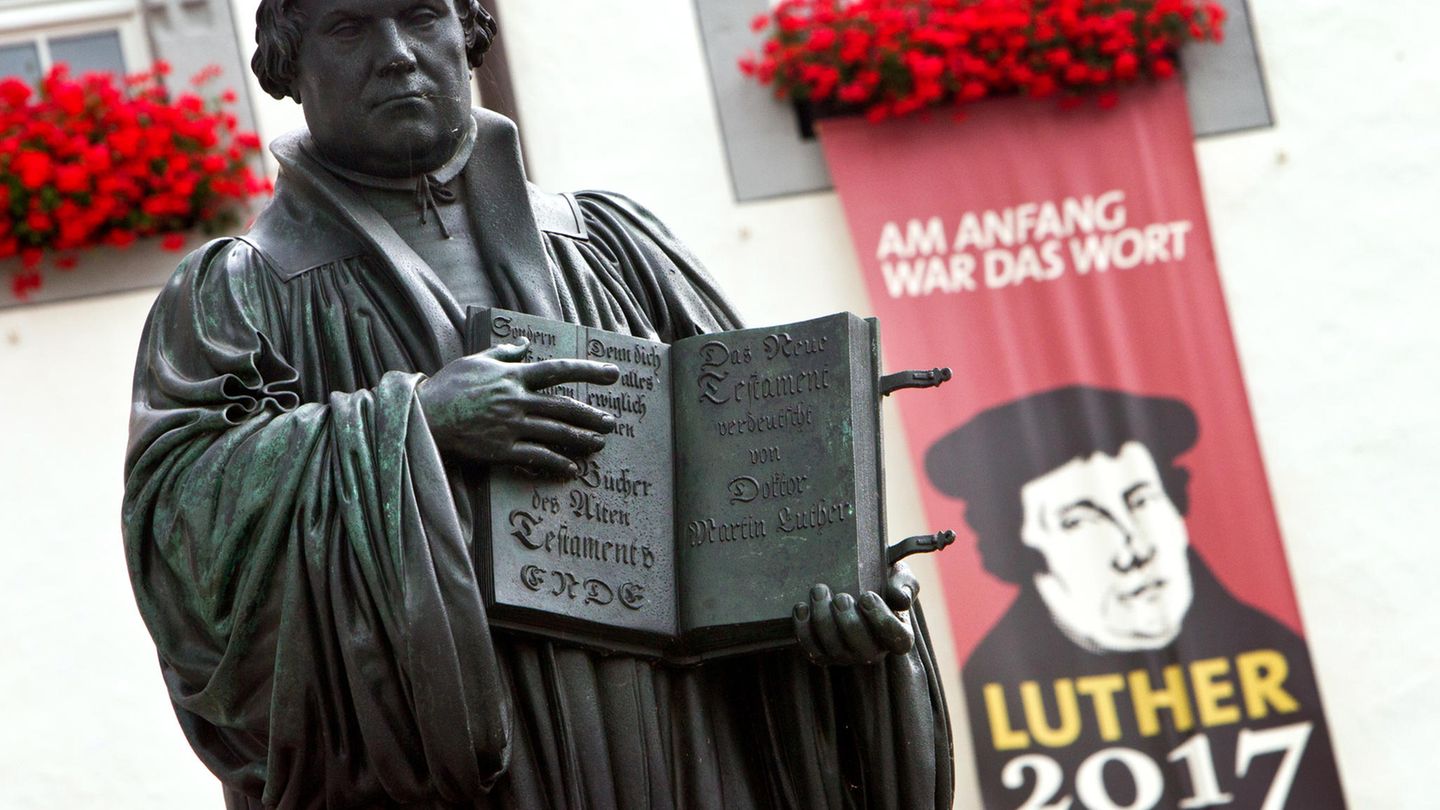
The most persistent aspect of the "Warum rülpset und furzet ihr nicht" saga is its strong association with Martin Luther. Yet, despite its frequent attribution to the German Reformer, definitive historical proof linking him directly to the quote is conspicuously absent. While scholars have scoured Luther's extensive writings and sermons, no concrete evidence has emerged to confirm he ever uttered these exact words. Goethe is another prominent figure often credited with the saying, highlighting how frequently such folk wisdom becomes attached to historical luminaries.
So, why Luther? The connection likely stems from his well-documented use of earthy, direct, and often scatological language in his other writings and pronouncements. Luther was known for his bluntness, his disdain for hypocrisy, and his willingness to use vivid, sometimes coarse, metaphors to make a point. Phrases like, "Aus einem verzagten Arsch kommt kein fröhlicher Furz" ("From a timid ass comes no joyful fart"), which *is* verifiably from him, illustrate his comfort with bodily references to convey profound theological or philosophical ideas. This established pattern of provocative rhetoric makes the attribution of "Warum rülpset und furzet ihr nicht" to him feel plausible, even if it lacks direct evidence.
It's a common phenomenon in history for memorable, witty, or culturally resonant sayings to become retrospectively attached to influential figures. These figures serve as convenient vessels for popular wisdom, enhancing their legendary status while giving the saying a sense of authoritative antiquity. For Luther, a figure who challenged the established order and championed a more direct, human-centric faith, a statement that seems to endorse natural bodily functions and critique superficial politeness aligns well with his overall persona and reformist spirit. Even if he didn't say it, the quote perfectly encapsulates a certain irreverent spirit that many associate with him.
The Evolving Etiquette of Bodily Noises Across Cultures
The story of "Warum rülpset und furzet ihr nicht" is not just about historical misattribution; it's also a fascinating lens through which to view the dynamic nature of social etiquette, particularly concerning bodily functions. What is considered polite or impolite is far from universal and has changed dramatically over centuries and across different cultures.
In contemporary Western societies, open burping and farting are generally considered rude in public settings. The expectation is one of discretion and suppression of such noises. This cultural norm has largely solidified over the past few centuries, influenced by evolving standards of hygiene, privacy, and concepts of "civilized" behavior.
However, a global perspective reveals a rich tapestry of differing customs. In some cultures, even today, a burp after a meal can indeed be interpreted as a sign of satisfaction and appreciation for the host's cooking. In parts of India, for instance, a soft burp might be acceptable and even customary after a particularly enjoyable meal, serving a similar function to the sarcastic intent of the full German quote ("Did you not enjoy the meal?"). Similarly, historical and anthropological studies point to various societies where different levels of acceptance for bodily noises have existed. These differences underscore that our own modern sensibilities are not inherently "correct" but are products of specific historical and cultural developments. To explore this fascinating evolution further, delve into
Medieval to Modern: The Evolving Etiquette of Burping and Farting.
Understanding these cultural variations is more than mere trivia; it offers practical insights. When traveling or interacting with people from different backgrounds, awareness of varying etiquette can prevent misunderstandings and foster respect. What might be deemed offensive in one context could be neutral or even polite in another. It teaches us to critically examine our own ingrained social norms and appreciate the diversity of human behavior.
Beyond the Burp: Luther's Legacy of Authenticity and Challenge
Regardless of whether Martin Luther ever uttered "Warum rülpset und furzet ihr nicht," the quote, through its association with him, has come to symbolize something deeper: a challenge to superficiality and a call for authenticity. Had Luther indeed said these words, they would undoubtedly have been steeped in his larger theological and social critique.
Luther vehemently opposed the performative piety and empty rituals he perceived in the medieval Church. He advocated for a direct, honest relationship with God and a life lived in truth, not just outward appearances. In this light, the supposed burping quote could be interpreted as a satirical jab at those who prioritize superficial manners over genuine satisfaction or honesty. It's a statement that, in spirit, aligns with his broader message: question norms, embrace the natural, and avoid hypocrisy.
His reform movement was not just about theological doctrines; it also profoundly influenced how people viewed themselves, their bodies, and their place in the world. By supposedly encouraging the acceptance of natural bodily functions, Luther (or the folk wisdom attributed to him) implicitly pushed back against an overly constrained view of human nature. It suggests that our physical realities are part of God's creation, not something to be shamefully hidden away, connecting even the simplest bodily acts to a larger context of faith and human experience. It underscores his humorous yet profound approach to dissecting societal norms and urging people towards a more direct and unvarnished truth.
Conclusion
The phrase "Warum rülpset und furzet ihr nicht" is a linguistic and historical curiosity that continues to captivate. While its direct attribution to Martin Luther remains unproven, its enduring popularity and the surrounding myths offer valuable insights into medieval manners, the nature of historical memory, and the evolution of social etiquette. Far from being a crude command, the full quote, "Why do you not burp and fart? Did you not enjoy the meal?", reveals a likely sarcastic or jocular intent, challenging perceived dissatisfaction rather than advocating for impolite behavior. Its connection to Luther, though apocryphal, highlights his historical reputation for blunt honesty and his challenge to superficiality. Ultimately, this infamous saying serves as a compelling reminder that history, like human behavior, is rarely as straightforward as it seems, inviting us to look beyond the surface and appreciate the nuanced complexities of our past.